
What is the Difference Between Offset Ink and Flexo Ink?
Global Printing Ink Industry Analysis — 2026
The global printing and packaging sector is undergoing profound and rapid transformation driven by aggressive green manufacturing policies, continuous high-speed production line upgrades, and increasingly stringent international safety and environmental compliance standards. As two irreplaceable core ink materials supporting commercial printing and industrial packaging manufacturing across the globe, offset ink and flexo ink together occupy over 70% of the entire global printing ink market share, serving countless printing factories, packaging manufacturers, brand enterprises, and international procurement teams worldwide. For industry practitioners and global buyers, systematically distinguishing the essential differences between offset ink and flexo ink is no longer merely a basic technical understanding, but a critical strategic step in controlling overall production costs, stabilizing finished product quality, iproving market competitiveness, and meeting global environmental certification and food safety standards. Although both ink types are developed for color rendering, pattern reproduction and surface decoration in printing processes, they possess fundamental differences in physical properties, core chemical formulations, printing adaptation principles, drying and curing mechanisms, industrial production efficiency, final printing quality, substrate compatibility, environmental protection performance, and mainstream application scenarios. This in-depth professional industry guide systematically sorts out the core distinctions between these two mainstream printing inks, combines the latest 2026 global printing industry development trends, and provides targeted, practical selection suggestions for global industrial users. The content helps enterprises effectively avoid material selection errors, reduce defective product rates and unnecessary production losses, and optimize overall printing and packaging solutions to adapt to diversified international market demands.
1. Fundamental Physical Properties & Formulation Differences
The obvious performance gap between offset ink and flexo ink fundamentally stems from their completely different physical forms and targeted formula designs, which are independently customized to match distinct printing equipment structures and professional ink transfer principles. This essential difference runs through the entire printing production process and directly determines the final printing effect, production efficiency, equipment matching performance, and later maintenance difficulty of the two inks, forming the core boundary between the two printing technologies in industrial applications. All subsequent differences in quality, cost and environmental protection are derived from this basic physical and formula differentiation, making it the primary reference standard for enterprise material selection and production process optimization.
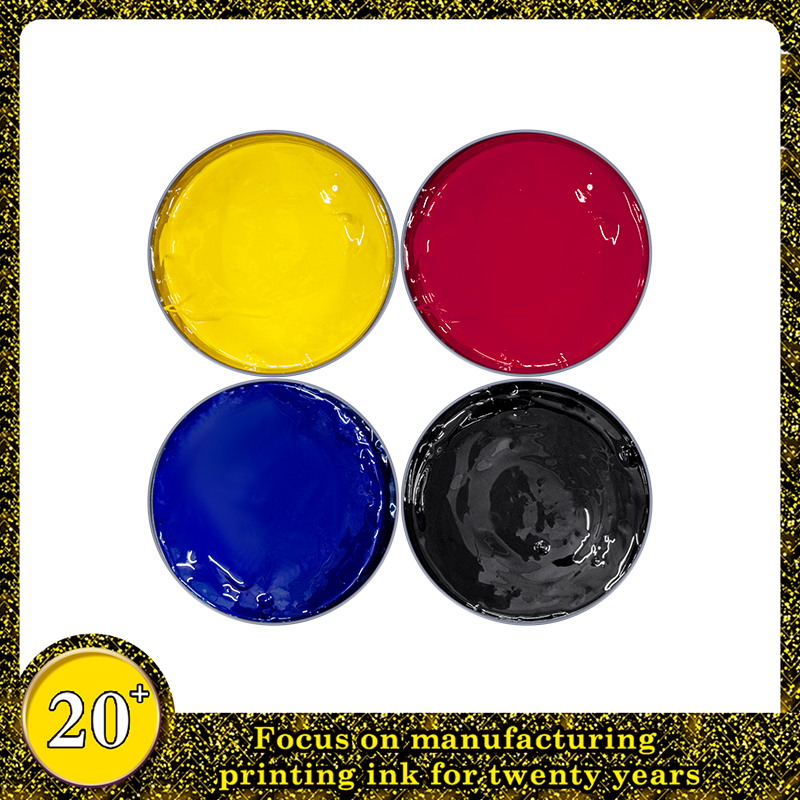
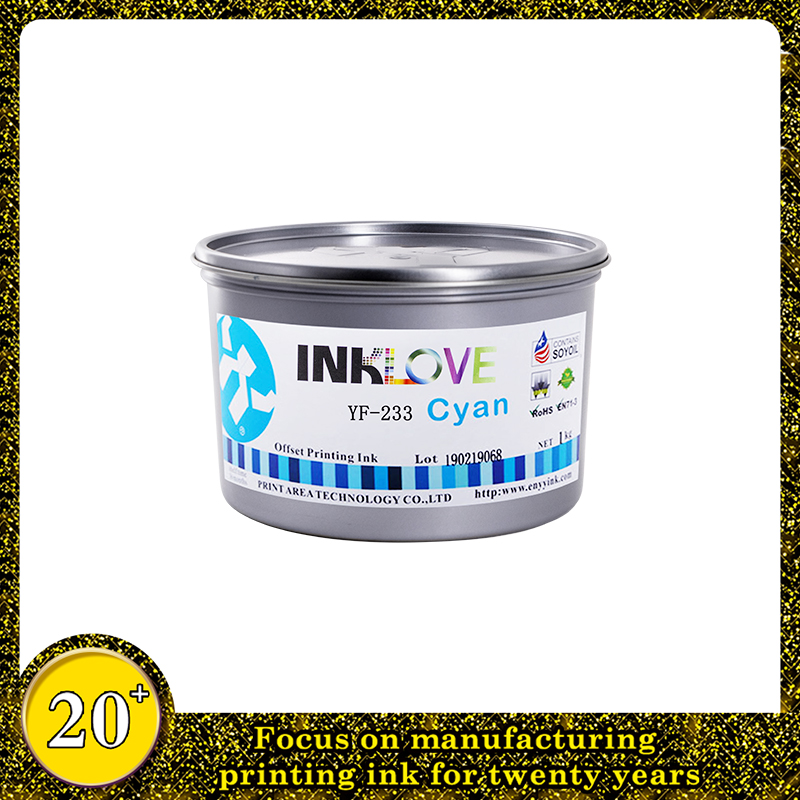
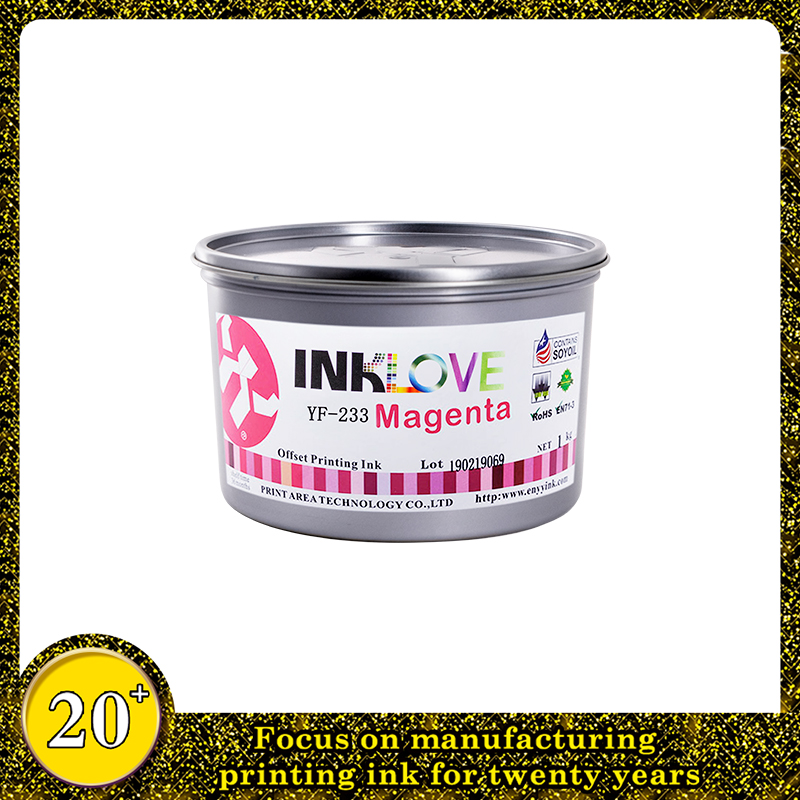
Offset ink is a high-tack, high-viscosity paste ink with dense texture and strong adhesion. Its core formula is composed of high-purity resin, soybean oil or refined mineral oil, pigment powder and functional additives. Most traditional offset inks adopt oil-based oxidation curing formulas, while high-end upgraded products include UV-curable offset inks. The paste state with high viscosity and high tack is specially developed for the long roller train system of offset lithographic presses. The multi-layer roller transmission structure of offset machines requires ink to have stable cohesion and uniform dispersion performance, ensuring that the ink can be evenly distributed on the printing plate without splashing, dripping or layered precipitation. In addition, offset ink is professionally optimized for the unique water-ink balance principle of offset printing. It has stable water resistance and emulsification resistance, which can effectively avoid color fading, ink floating, dot distortion and other printing defects caused by the fusion of fountain solution and ink during high-precision continuous printing, laying a foundation for high-fidelity color reproduction.
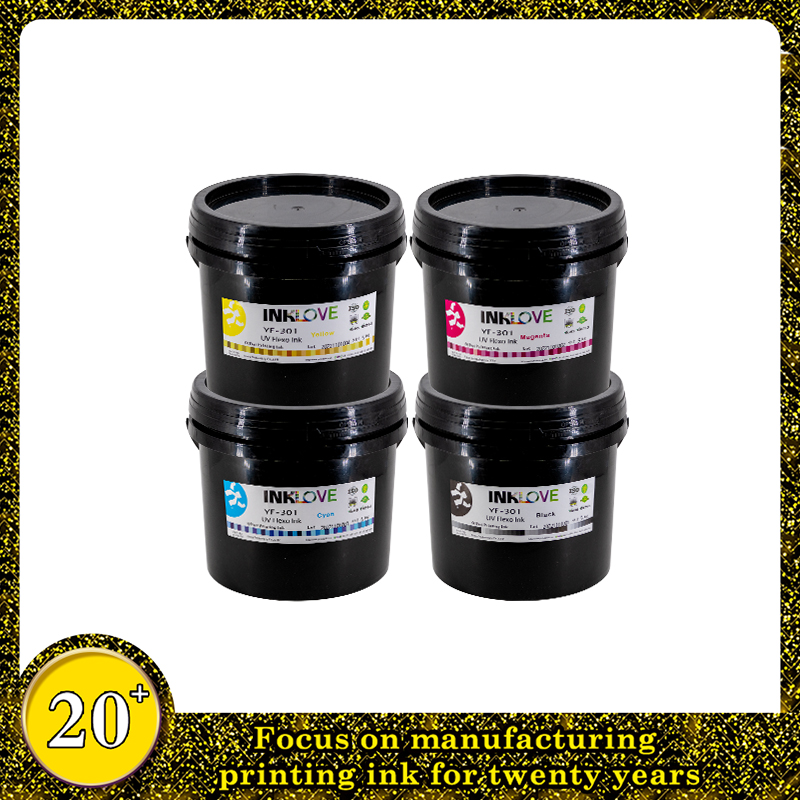
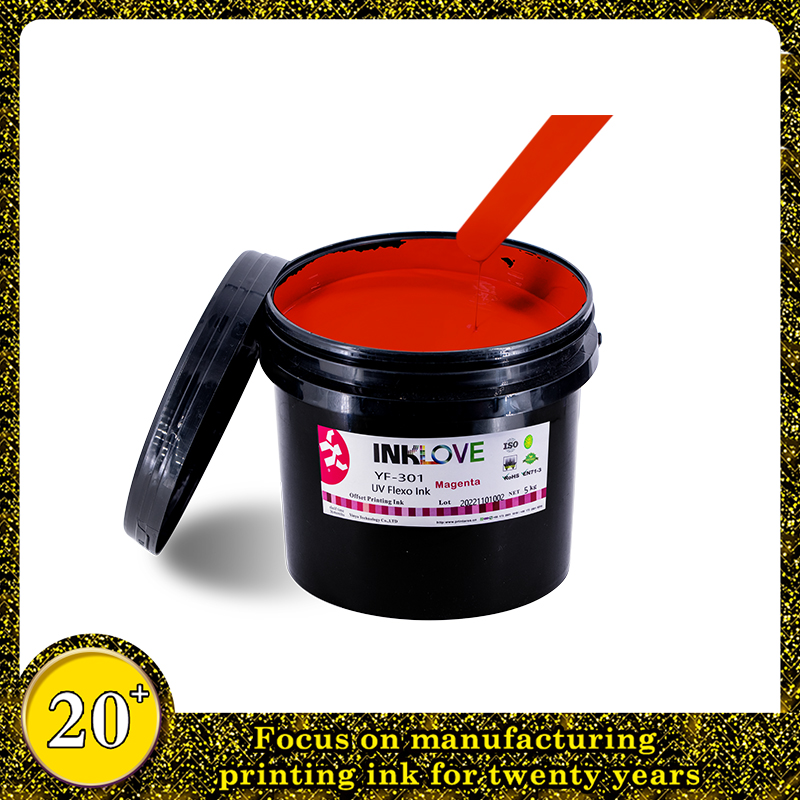
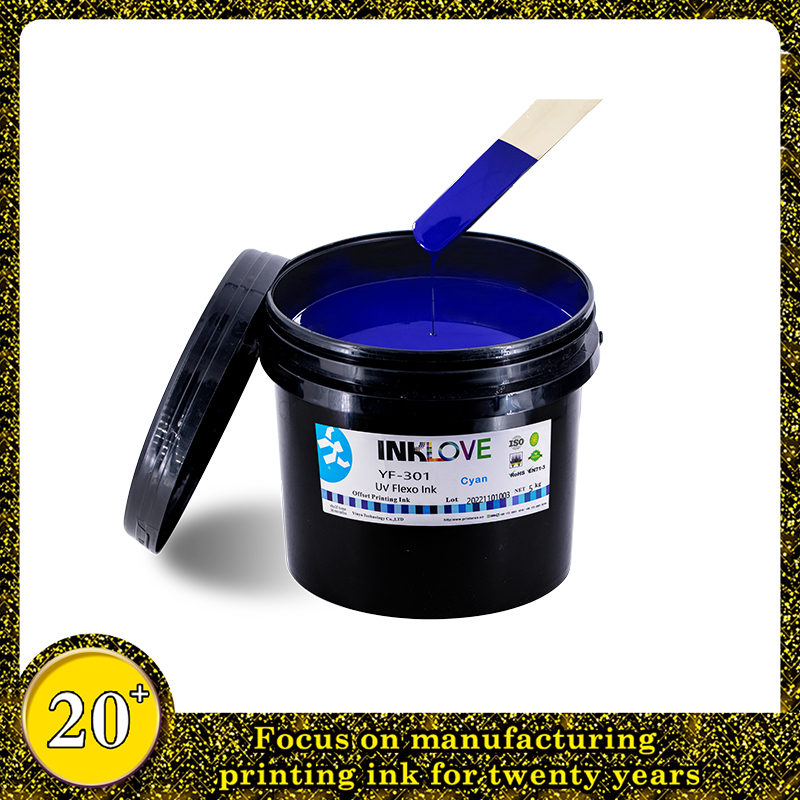
Flexo ink is a low-viscosity flowing liquid ink, which is completely different from the paste state of offset ink. Its mainstream formulas are divided into three categories: water-based, solvent-based and UV-curable, among which water-based flexo ink has become the mainstream eco-friendly product in the global market. Flexo ink is tailor-made for the anilox roller metering and short-path ink transfer system of flexographic presses. The low-viscosity fluid characteristics enable the ink to quickly and uniformly fill the mesh holes of the anilox roller, realizing quantitative and stable ink transfer. During long-term high-speed mass production, liquid flexo ink will not produce ink accumulation, caking and roller blockage, and has excellent fluidity and anti-precipitation stability. Different from the oil-based system of offset ink, flexo ink formula has strong substrate adaptability, and can adjust surface tension and adhesion according to different printing materials, solving the printing difficulty of non-absorbent flexible substrates that are difficult for traditional offset ink to print.
2. Drying Mechanism & Industrial Production Efficiency Gap
Drying mechanism is one of the most practical differences between offset ink and flexo ink in industrial production, directly affecting production speed, order delivery cycle, post-press processing efficiency and product yield, and becoming an important indicator for enterprises to select ink types according to production scale.
Traditional oil-based offset inks rely on air oxidation polymerization to complete film formation and drying. After printing, the ink layer needs to fully contact with oxygen in the air to undergo chemical cross-linking reaction, gradually forming a dry and firm ink film. This natural drying mode has a relatively slow speed, and a certain drying waiting period is required after printing. Stacking and post-processing operations in advance will easily cause ink smudging, pattern blurring and product scrapping. Although the upgraded UV offset ink adopts instantaneous UV curing technology and solves the problem of slow drying speed, the overall production rhythm of offset printing equipment is relatively stable and slow. Offset printing is more suitable for medium and small-batch high-precision orders with stable delivery cycles, and cannot adapt to ultra-high-speed inline continuous production requirements of large-batch packaging orders. In addition, the drying process of oil-based offset ink is easily affected by environmental temperature and humidity, and the yield rate will fluctuate slightly in high-humidity or low-temperature environments.
Flexo inks adopt efficient drying and curing modes dominated by water/solvent evaporation and UV cross-linking, which perfectly matches the high-speed production characteristics of flexographic equipment. Water-based and solvent-based flexo inks rely on rapid evaporation of volatile components in the formula to realize instant drying after printing. The whole drying process takes only a few seconds, with no need for long stacking and waiting. UV flexo ink can complete 100% curing and film formation in an instant under UV light irradiation, with thorough drying and no residual volatile components. The efficient drying performance supports uninterrupted inline linkage operations of printing, laminating, die-cutting, slitting and rewinding, greatly shortening the production cycle and improving unit time output. For large-batch standardized packaging orders such as food packaging bags, cartons and labels, flexo ink can increase production efficiency by more than 50% compared with traditional offset ink, and effectively reduce defective rates caused by ink drying problems.
3. Printing Quality, Color Performance & Application Scenarios
Due to the differences in ink film thickness, color reproduction ability and transfer accuracy, offset ink and flexo ink form completely different advantages in printing quality, covering two major segmented markets of high-end commercial graphic printing and mass packaging printing respectively, with clear and non-overlapping application scenarios.
Offset ink takes the lead in high-precision color restoration and delicate printing performance. Relying on high-viscosity paste characteristics and ultra-thin uniform ink transfer mode, offset ink can accurately restore ultra-fine dots, tiny characters, delicate lines and smooth gradient colors. The ink film after drying is thin and flat, with uniform color distribution, high saturation and strong layering, showing excellent color consistency and reduction degree. In the field of high-end commercial printing, offset ink is the undisputed mainstream choice, widely used in art brochures, high-end magazines, product catalogs, luxury books, coated paper fine printing, high-end posters and other products requiring extreme color accuracy and delicate texture. Its stable dot restoration ability and color reproducibility can meet the strict color standard requirements of high-end brand customers, and the printing quality is far superior to flexo ink in fine graphic performance.
Flexo ink focuses on solid color coverage and multi-substrate adaptive printing. Compared with offset ink, flexo ink forms a thicker and fuller ink film after transfer, with more uniform solid color filling, no blank spots, color streaks and pinholes, and excellent flatness of large-area solid color printing. Its biggest advantage lies in ultra-wide substrate adaptability. Offset ink is only suitable for absorbent paper materials such as coated paper and uncoated paper, while flexo ink can perfectly adapt to various complex substrates, including corrugated cartons, food paper containers, PE/PP/BOPP plastic films, self-adhesive labels, non-woven fabrics and other flexible and non-absorbent materials. Therefore, flexo ink has become the core supporting material for food packaging, daily chemical packaging, pharmaceutical packaging, logistics cartons, flexible plastic packaging and other industries, and is the most widely used ink type in the global packaging printing field.
4. Environmental Protection Performance & International Compliance Standards
With the global promotion of green printing and sustainable manufacturing, as well as the continuous tightening of VOC emission standards and food contact safety regulations in Europe, America and other developed regions, environmental protection and safety compliance have become core indicators for global buyers to screen ink suppliers. The two inks show obvious hierarchical differences in environmental performance.
Traditional oil-based offset inks contain a certain amount of volatile organic compounds, which will produce VOC emissions during the drying and volatilization process. Even the upgraded soybean oil-based offset inks reduce harmful emissions, they still have obvious gaps compared with eco-friendly flexo inks, and cannot fully meet the ultra-low emission standards of high-standard green factories and food-grade packaging requirements. In addition, the waste ink and cleaning solvent generated in the use process of offset ink have certain environmental treatment costs, increasing the green production pressure of enterprises.
Water-based flexo ink, the mainstream product of flexo ink series, is recognized as a green and safe printing material by the global printing industry. It featuresultra-low VOC, odorless, non-toxic, non-irritating, and all raw materials meet international food contact safety standards. Industry authoritative data shows that qualified food-grade flexo inks reduce VOC emissions by 60%-80% compared with traditional offset inks, which can effectively reduce air pollution and meet the EU REACH regulation, US FDA food contact certification, RoHS environmental protection directive and other international strict compliance requirements. At present, more than 80% of global food, beverage and pharmaceutical packaging manufacturers have fully replaced traditional oil-based inks with water-based flexo inks to avoid environmental penalties and buyer order rejection risks caused by non-compliant materials. UV flexo ink further realizes zero VOC emission, becoming the preferred material for high-end green packaging customization.
5. Production Cost & Industrial Adaptability Analysis
In addition to quality and environmental performance, production cost and equipment adaptability are key factors affecting enterprises' long-term material selection. The two inks have their own cost advantages in different production scales and order types.
Offset printing and offset ink are suitable for small and medium-batch high-precision orders. Although the unit ink cost is slightly higher, its excellent color reproducibility can create high added value for high-end printed products. However, offset printing has high requirements for equipment debugging and operators, with complex pre-press preparation processes and long debugging cycle, so it is not cost-effective for large-batch low-value packaging orders. At the same time, the water-ink balance system of offset equipment is easy to produce waste ink and waste water, increasing the comprehensive production and environmental protection cost.
Flexo ink and flexographic equipment are oriented to large-scale mass production. The ink formula has stable performance, simple equipment debugging, short pre-production preparation time, and low defective rate in continuous production. The comprehensive consumption cost of ink per unit product is significantly lower than that of offset printing. In addition, water-based flexo ink has no need for organic solvent cleaning, low waste discharge and low environmental protection treatment cost, which can effectively help enterprises reduce long-term operating costs. For standardized packaging products with large output and stable styles, flexo ink has obvious cost advantages and industrial adaptability.
6. Core Selection Principles for Global Printing Manufacturers
Combined with the technical characteristics, quality advantages, cost performance and application boundaries of offset ink and flexo ink, printing and packaging enterprises can carry out accurate material selection according to product positioning, order batch and customer certification requirements, so as to maximize production benefits and product competitiveness:
• Priority to Choose Offset Ink: Suitable for high-end fine graphic printing scenarios, including coated paper brochures, art albums, high-end magazines, luxury packaging color boxes, precision color printing products and small and medium-batch customized orders with ultra-high color accuracy requirements. It is the best choice for brand publicity materials and high-value printed products that pursue delicate texture and restore design details in an all-round way.
• Priority to Choose Flexo Ink: Suitable for all kinds of packaging printing scenarios and large-batch mass production orders, including food flexible packaging bags, paper cups and paper containers, corrugated cartons, self-adhesive labels, plastic film printing, non-woven product printing, and all packaging products requiring food-grade environmental protection certification and high-speed continuous production.
Industry Development Trends & Final Verdict
In the modern global printing industry, offset ink and flexo ink are not mutually substitutable competitive products, but complementary and mutually supportive core materials, occupying irreplaceable core positions in their respective segmented markets. Offset ink has always been the benchmark of high-precision commercial printing with its outstanding color restoration and delicate printing performance, firmly dominating the high-end graphic printing market. Flexo ink has become the mainstream material of the global packaging printing industry relying on its high efficiency, environmental protection, low cost and multi-substrate adaptability, and is constantly expanding its market share with the upgrading of green packaging trends.
With rapid advancements in fine chemical formulation and printing equipment technology across the globe, both offset ink and flexo ink are undergoing continuous technical iteration and performance optimization to cater to upgraded international market standards and sustainable manufacturing requirements. Traditional offset ink, once limited by high VOC emissions and slow curing speed, has achieved remarkable breakthroughs in environmental performance. Modern low-carbon soybean offset ink and UV offset ink effectively reduce volatile substance release, lower odor residue, and enhance curing efficiency, gradually bridging the environmental and efficiency gaps that once restricted its application scope. Meanwhile, flexo ink, long recognized for eco-friendliness and high-speed adaptability, is now improving its fine printing capability through pigment refinement, resin modification and surface tension adjustment. Advanced flexo ink products can restore finer dots, smoother color gradients and sharper tiny texts, effectively breaking the outdated industry stereotype that flexo printing is only applicable for low-precision packaging products. In the current global printing market, these two mainstream ink technologies no longer have absolute advantages or disadvantages, but form a benign complementary pattern. Offset ink maintains irreplaceable dominance in high-end commercial graphic printing relying on ultra-precise color reduction and delicate printing texture, while flexo ink leads the mass green packaging market with high efficiency, low comprehensive cost, diverse substrate adaptability and superior safety compliance. Moving forward, both ink categories will continue to deepen segmented technical upgrading, continuously adapt to personalized, high-standard and environmentally friendly production needs of global buyers, and jointly drive the intelligent, low-carbon and high-quality development of the entire international printing and packaging industry.
About Us
We are a professional global manufacturer and supplier specializing in the R&D, production and customized sales of high-quality offset inks and eco-friendly flexo inks, serving printing and packaging enterprises across more than 160 countries and regions. With years of in-depth industry experience and mature fine chemical production technology, our product lineup covers full-series printing inks, including environmentally friendly soybean oil offset inks, high-efficiency UV curing offset inks, food-grade water-based flexo inks, industrial solvent-based flexo inks and high-performance UV flexo inks. All products have passed authoritative international certifications such as EU REACH, US FDA food contact safety certification and RoHS environmental protection standard, ensuring stable quality, high color saturation, excellent printing fluency and long-term storage stability. We are committed to providing one-stop professional ink solutions for global customers, supporting personalized formula adjustment according to different printing equipment, printing speeds, substrate materials and order quality requirements. We consistently help overseas clients optimize printing effects, reduce defective rates, control comprehensive production costs, and enhance the market competitiveness of their final printed and packaged products.
Media Contact
Email: yinya102@enyyink.com
Website: www.enyyink.com
Tel: +86 13726651139